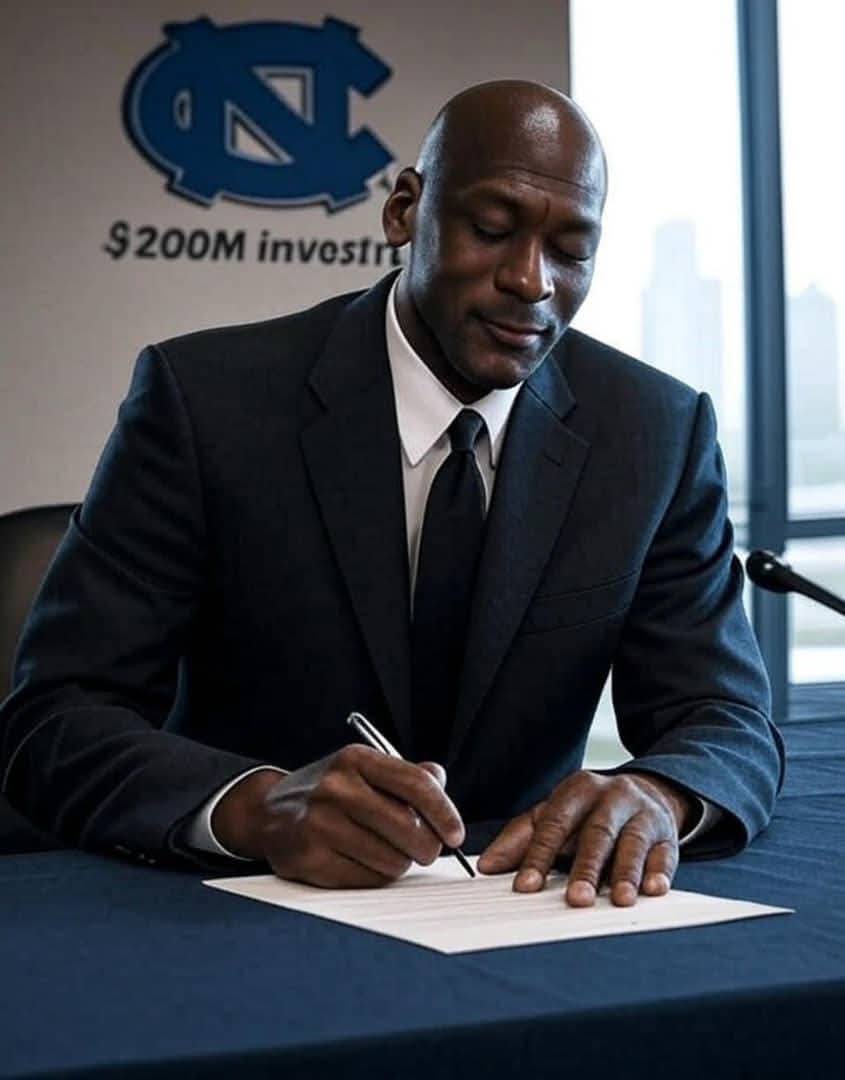
Michael Jordan to UNC? NBA Legend in Stunning Bid to Buy Tar Heels Basketball—Plus a $200M Plan to Dominate College Hoops
The world of collegiate basketball could be on the verge of its biggest seismic shift in decades, as reports circulate that Michael Jordan—yes, *the* Michael Jordan—is in serious discussions to purchase a controlling position in the University of North Carolina’s famous basketball team. The six-time NBA champion, millionaire businessman, and Tar Heel great is reportedly contemplating a $200 million investment aimed at converting UNC into an unequaled powerhouse, altering the landscape of college athletics in the process.
If real, this move would send shockwaves through the NCAA, suddenly making Chapel Hill the centerpiece of basketball’s future.
Jordan’s connection to UNC is the stuff of legend. As a freshman in 1982, he hit the game-winning shot to deliver Dean Smith his first national championship, cementing his legacy before he ever donned a Chicago Bulls jersey. Decades later, his loyalty to Carolina remains unwavering—from his courtside appearances at games to his vocal support for the program. But ownership? That’s a leap few saw coming. Sources close to the situation suggest Jordan’s vision goes beyond nostalgia; he sees an opportunity to revolutionize college basketball in the NIL (Name, Image, Likeness) era, where deep-pocketed boosters and collectives now dictate recruiting battles. With his unmatched brand power and business acumen, Jordan could make UNC the ultimate destination for elite talent.
The $200 million proposal, as insiders describe it, would target three important areas: facilities, player development, and NIL resources. UNC’s basketball infrastructure is already among the best, but Jordan’s investment might take it into uncharted territory. Think private jets for road games, a state-of-the-art performance facility rivaling NBA organizations, and collaborations with Jordan Brand to outfit players with exclusive gear. More significantly, the monies would fuel UNC’s NIL collective, assuring elite recruits and transfers could command professional-level pay
But why now? The timing is no accident. College basketball is at a crossroads, with the NCAA’s power eroding and programs scrambling to adapt to free agency-like transfer portals and million-dollar player deals. Jordan, ever the competitor, seems intent on ensuring UNC doesn’t just adapt but dominates. There’s also the symbolic weight of the move: Jordan reclaiming the program that launched him, this time as its architect. Some speculate it’s his answer to Duke’s continued prominence under Coach K’s successors—a chance to tilt the rivalry permanently in UNC’s favor. Others suggest it’s a legacy play, a way to cement his influence on the sport beyond the NBA.
Of course, hurdles remain. While private investment in college sports is growing, outright ownership of a program by an individual would require unprecedented NCAA approval—or a complete bypass of the organization altogether. The potential for conflicts of interest (imagine Jordan recruiting players who could one day sign with his Charlotte Hornets) would draw scrutiny. But if anyone has the clout to rewrite the rules, it’s MJ. His mere involvement could pressure the NCAA to fast-track reforms or risk losing relevance.
The ripple effects would be significant. Rival programs would strive to keep up, perhaps igniting an arms race for billionaire donors. High school phenoms would see UNC as a golden ticket: top-tier coaching, national exposure, *and* Jordan’s mentorship? It’s an unbeatable pitch. And for fans, the spectacle would be irresistible—Jordan prowling the sidelines, his Air Jordans on the feet of the next generation of Tar Heels, all while the program chases titles with NBA-level resources.
Critics might argue this further commercializes college sports, blurring the line between amateurism and professionalism. But Jordan’s counter would likely be simple: that ship has sailed. The game is evolving, and rather than resist, UNC can lead. His blueprint could become the model for how elite programs thrive in this new era.