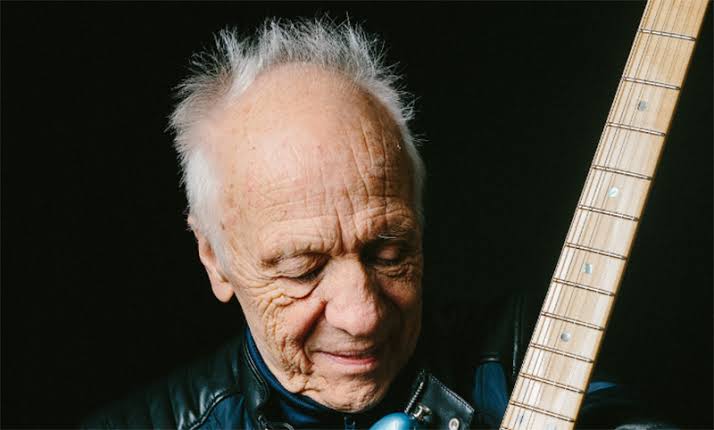
Urgent:Robin Trower Rushed to the hospital in a critical condition
On Day of the Eagle, the fast-paced, heavy blues song from his second solo album, Bridge of Sighs (1974), Robin Trower remarks, “It is probably the best rock and roll song I have ever written.” “It is still a lot of fun to play, too. To pull it off successfully, you have to be slightly on the edge of making it work. There has to be some effort involved. I think that is what makes it so exciting to play.”
Day of the Eagle, the song that made Trower a six-string powerhouse, is considered the apex of his career. In the context of his power trio, which also featured drummer Reg Isidore and bassist/vocalist James Dewar, Trower’s guitar playing is expressive, soulful, and brimming with the essence of Jimi Hendrix, a guitarist with whom he has frequently been likened.
“B.B. King, Albert King, and Jimi Hendrix are my three mentors,” Trower says. Hendrix was a genius, so I do not think it does him any good to compare me to him. I was aware that I should not imitate others.
“If you get caught up on other people’s stuff, it may stop your own creativity from coming through.” For example, I never sat down and worked out any of Hendrix’s or B.B. King’s licks; instead, I was more interested in understanding what was behind the lick—what was the feeling, the emotion that made them play it that way.
Trower’s creation of the song’s primary riff marked the start of the songwriting process for Day of the Eagle. He says, “That is where all my songs begin.” “The modifications and the remaining guitar sections came after I came up with that. After finishing that, I created the lyrics for the song.
“I’m not sure anything particular inspired the lyrical matter. They were just ideas that came into my head. The most important thing for me about lyrics, though, is that they’ve got to be saying something. The sound of the words is important too.”
He says, “It went down as a three-piece, live in the studio.” We set up the drums, bass, and rhythm guitar first, and then I set up the lead work. After that, the lead vocal was performed by Jimmy [Dewar]. Before obtaining the take that we saved, I would estimate that we performed the song two or three times.