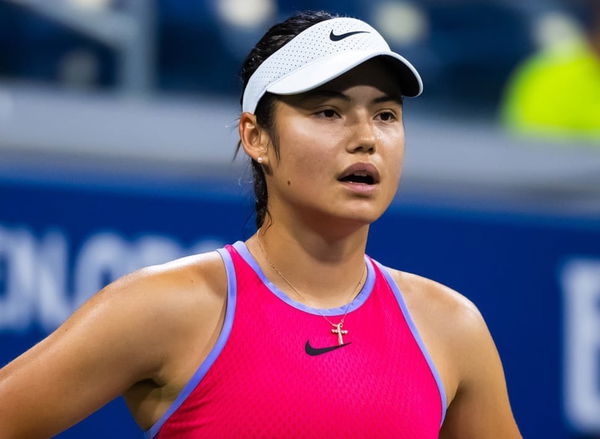
In a move that’s sending shockwaves across the Women’s Tennis Association (WTA) tour, Emma Raducanu’s new head coach, Luca Santoro, has unveiled a radical new tactical approach that’s already turning heads—and turning matches—in the British star’s favor.
The 2021 US Open champion, whose career has seen both dazzling highs and frustrating injury spells, appears to have found fresh momentum under Santoro’s unconventional methods. Insiders close to Raducanu’s camp reveal that the coach’s “dual-rhythm” strategy—an innovative blend of tempo disruption and psychological pressure—is behind her recent string of dominant wins on the clay court circuit.
> “It’s like she’s two players in one match,” said former pro and commentator Martina Hingis. “One moment she’s absorbing pace like a wall, the next she’s dictating with aggressive net charges—it’s throwing opponents completely off.”
Santoro, a former strategist for multiple top-10 players, has reportedly re-engineered Raducanu’s training around unpredictability: alternating slow-ball defensive drills with ultra-aggressive shot-making under pressure scenarios. The tactic forces opponents into constant decision-making, often leading to unforced errors and mental fatigue by the second set.
What’s more shocking to rivals is the minimal use of baseline rallies, once a staple of Raducanu’s game. Instead, she now focuses on shorter points, angled slices, and off-speed drop shots—a style that breaks with the power-dominated norms of the WTA.
> “It’s not just physical,” said Santoro during a brief media appearance. “It’s chess. We’re not just playing the ball—we’re playing the mind behind it.”
Raducanu’s impressive victories over top-seeded players in recent weeks have catapulted her back into the WTA Top 20, and whispers of a Grand Slam comeback are growing louder by the day.
While some critics have labeled the strategy “risky” and potentially unsustainable against power players, others are calling it a revolution in modern women’s tennis.
If results continue, Santoro’s game-changing tactic may not only redefine Raducanu’s career—but could shift the entire landscape of women’s tennis in 2025.