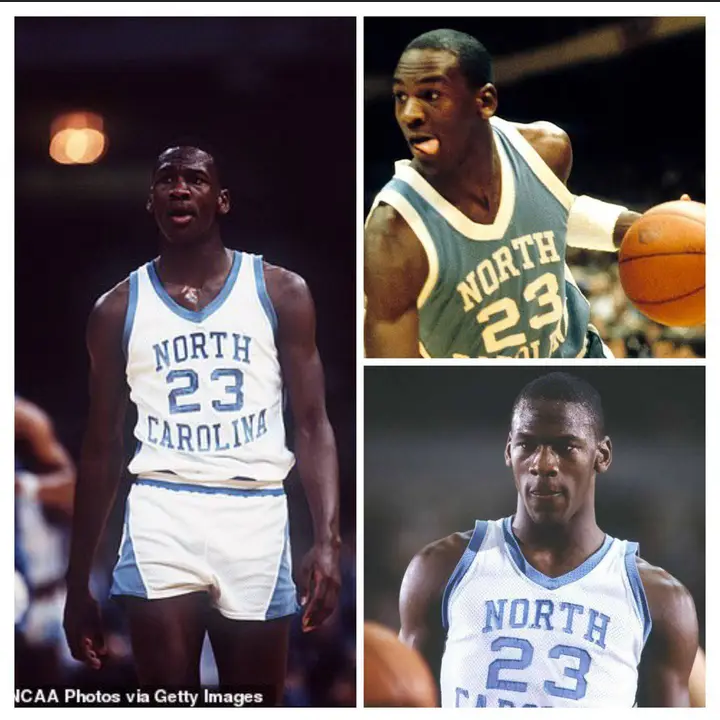
Michael Jordan is a household name — a global icon, the G.O.A.T., the man behind the myth. But what if we told you that his journey to greatness began with secrets, overlooked moments, and decisions the University of North Carolina would rather you forget?
When a young, quiet kid from Wilmington stepped onto the court at UNC in 1981, he was far from the legend we know today. But sources close to the program reveal there was something different about Jordan — and not everyone was ready to embrace it.
According to former teammates and insiders, Jordan was nearly overlooked by recruiters in favor of flashier prospects. “There were coaches who thought he wasn’t ready,” one former assistant, who spoke on condition of anonymity, shared. “He wasn’t the star on day one — but he had something none of us had seen before.”
Even more shocking? Tensions behind the scenes suggest that not everyone in the Tar Heels system was rooting for Jordan to succeed. Some believed his intensity was “too much” and that he clashed with veteran players. “He wanted to win so badly, it rubbed people the wrong way,” a former teammate admitted.
It wasn’t until Dean Smith — the legendary coach with an eye for greatness — took a gamble on the freshman that things began to change. But even Smith couldn’t have foreseen how Jordan’s last-second shot in the 1982 NCAA Championship would catapult him into history.
Why has UNC remained tight-lipped about the early doubts and internal conflicts surrounding Jordan’s rise? Some speculate it’s about protecting the university’s pristine image. Others believe it’s because acknowledging the full truth would show just how close they came to missing out on the greatest basketball player of all time.
Jordan’s journey wasn’t just about talent. It was about defying expectations, proving doubters wrong, and overcoming quiet resistance from the very system that was supposed to support him.
So next time you see the highlight reels, remember: There’s more to Jordan’s legacy than buzzer-beaters and championships. There’s a hidden story — and UNC might not want you to know it.